
NASA Launch Schedule: Upcoming Rocket Launches, Dates, and How to Watch
Explore upcoming NASA rocket launches, important space missions, schedule updates, and ways to watch launches live.

The nasa launch schedule helps space enthusiasts follow upcoming rocket launches, astronaut missions, satellite deployments, and important space exploration events. Whether you want to watch a spacecraft leave Earth or follow NASA’s plans for future Moon missions, checking the latest schedule is the best way to stay informed.
NASA’s launch dates can change because of weather conditions, technical problems, safety checks, or other mission requirements. For this reason, the most reliable way to find confirmed launch times is to check NASA’s official website and mission updates. You can also follow live broadcasts to see rocket launches, listen to expert commentary, and learn about each mission’s goals.
In this guide, you will discover where to find the NASA launch schedule, what upcoming missions to follow, how to watch launches online, and why launch dates sometimes change.
NASA Launch Schedule: Where to Find the Latest Updates
The easiest way to check the NASA launch schedule is through NASA’s official website. Its launch coverage and mission pages provide information about planned launches, spacecraft activities, and important space exploration events.
Visit NASA’s official website to explore current missions and announcements. You can also visit NASA’s Launch Services Program to learn about NASA’s launch activities and commercial launch services.
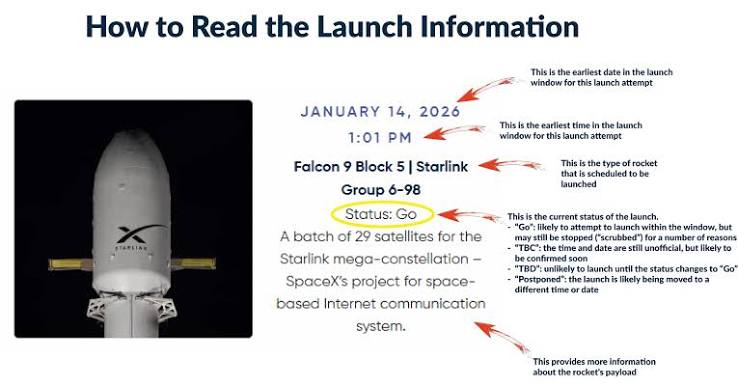
When checking a launch listing, pay attention to these details:
- Launch date: The planned day of the launch.
- Launch time: The expected time, which may be listed in Eastern Time or another specified time zone.
- Mission name: The spacecraft, rocket, or scientific project involved.
- Launch location: The launchpad or spaceport from which the rocket will depart.
- Mission objective: The purpose of the launch, such as delivering supplies, studying the universe, or carrying astronauts.
Always confirm the date and time shortly before a scheduled launch. A published target date does not guarantee that a rocket will lift off as planned.
What NASA Missions Should You Follow?
NASA works on several types of space missions, from human spaceflight to robotic exploration. Some launches involve NASA-built spacecraft, while others use commercial rockets operated by companies working with the agency.
Artemis Moon Missions
NASA’s Artemis program aims to return astronauts to the lunar surface and establish a foundation for future exploration. The program includes crewed missions, spacecraft development, and systems designed to support longer stays around and on the Moon.
Artemis missions involve several complex systems, including the Space Launch System rocket and the Orion spacecraft. Their schedules depend on technical readiness, testing, safety requirements, and coordination between mission teams.
Because mission plans can evolve, check NASA’s official Artemis pages for the latest announcements rather than relying on older launch dates.
International Space Station Missions
NASA also supports missions to the International Space Station (ISS). These include astronaut transportation, cargo deliveries, scientific research, and equipment supplies.
Commercial spacecraft operated by companies such as SpaceX and other NASA partners play an important role in these activities. Their launch dates may appear on NASA mission pages and the launch providers’ official websites.
ISS missions are especially interesting because viewers can follow the rocket launch, spacecraft journey, docking process, and crew activities.
Scientific and Robotic Missions
NASA launches scientific spacecraft to study Earth, the Sun, distant planets, and the wider universe. These missions help scientists understand climate patterns, solar activity, planetary environments, and the origins of the universe.
Some spacecraft travel for years before reaching their destinations. Others operate closer to Earth and provide information that supports research and everyday applications.
Not every NASA-related launch carries astronauts. Many launches focus on scientific instruments, satellites, or technology demonstrations that support future exploration.
How to Watch NASA Rocket Launches Live
Watching a rocket launch online is easier than ever. NASA regularly provides launch coverage for major missions through its official digital platforms.
Here are the main ways to watch:
- NASA+: Visit NASA+ for NASA programming and selected live mission coverage.
- NASA YouTube: Check the official NASA YouTube channel for launch broadcasts, mission briefings, and recorded events.
- NASA website: Look for mission-specific announcements, livestream links, and launch coverage.
- Launch provider websites: For commercial missions, check the official provider’s website for livestreams and updated launch information.
Live coverage often begins before liftoff. Depending on the mission, it may include rocket preparations, explanations from engineers, weather updates, and commentary from mission specialists.
If you are watching from another country, check the time zone carefully. A launch scheduled for the evening in Florida may take place at a different local time in Pakistan, the United Kingdom, or another region.
Why NASA Launch Dates Sometimes Change
Rocket launches require careful coordination, and even a small technical concern can lead to a delay. Launch teams prioritize the safety of astronauts, spacecraft, ground personnel, and equipment.
Common reasons for launch delays include:
- Weather conditions: Strong winds, lightning, heavy clouds, or other unsuitable conditions can prevent a safe launch.
- Technical issues: Engineers may need extra time to inspect engines, sensors, fuel systems, or other equipment.
- Safety checks: Teams must complete required tests and confirm that systems are operating correctly.
- Range restrictions: Airspace, nearby waters, and launch-site safety requirements must be managed.
- Mission readiness: Spacecraft, ground systems, and launch vehicles must be prepared together.
A delay does not necessarily mean a mission has failed. In many cases, postponing a launch gives engineers more time to resolve concerns and protect the mission.
When a launch is postponed, NASA or the launch provider may announce a new target date. However, the replacement date can also change if further work is required.
How to Stay Updated on Upcoming Space Launches
If you want to follow spaceflight regularly, make checking official mission updates part of your routine.
Start by reviewing NASA’s website for upcoming events and mission announcements. Follow NASA’s official social media accounts and YouTube channel for livestream notifications and schedule changes.
You can also check commercial launch providers for missions involving their rockets. This is useful because many NASA-supported missions use vehicles operated by private companies.
For the most accurate information, compare the announced launch date with the latest mission update. Be cautious with outdated articles, unofficial countdown pages, and social media posts that do not identify their sources.
Remember that a launch window may cover a period rather than one exact moment. The rocket may lift off at any suitable time within that window, depending on mission requirements.
Frequently Asked Questions
Where can I check the NASA launch schedule?
Visit NASA.gov and look for launch coverage, mission pages, and official announcements. These sources are the best starting points for current information.
Does NASA launch rockets every day?
No. Launches depend on mission requirements, vehicle availability, technical readiness, and suitable conditions. There is no guarantee of a launch every day.
Can I watch NASA launches for free?
Yes. NASA provides free online programming through NASA+, its official YouTube channel, and its website. Availability and coverage vary by mission.
Why was a scheduled NASA launch postponed?
Launches may be delayed because of weather, technical checks, safety requirements, or other operational concerns. Check the latest official announcement for the specific reason and any revised date.
Are all space launches part of NASA?
No. SpaceX, other commercial companies, international space agencies, and private organizations conduct their own launches. Some missions are NASA-led, while others are commercial or independently operated.
Final Takeaway
The NASA launch schedule is a useful resource for anyone interested in rockets, astronauts, Moon exploration, and scientific discoveries. By checking NASA’s official website, following mission announcements, and watching verified livestreams, you can keep up with upcoming launches without depending on outdated information.
Because launch plans can change, always confirm the latest date, time, and viewing details before a mission begins. This simple habit will help you follow space exploration more confidently and never miss an important update.
read more: https://publishbuddie.co.uk/