Heart Attack: Symptoms, Causes, Treatment, and Prevention
Discover the common warning signs of a heart attack, what causes it, how it is treated, and practical ways to reduce your risk.

A heart attack is a serious medical emergency that occurs when blood flow to part of the heart muscle becomes blocked or severely reduced. Without enough oxygen-rich blood, the affected heart muscle can become damaged. Recognizing the warning signs and getting medical help quickly can save a life.
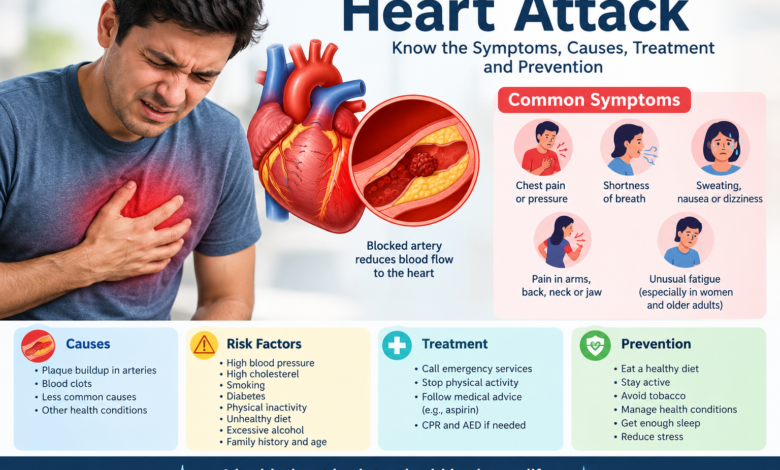
Common heart attack symptoms include chest pain or pressure, shortness of breath, sweating, nausea, and discomfort in the arms, back, neck, or jaw. However, symptoms can vary from person to person, and some people experience mild or unusual warning signs.
A heart attack can happen suddenly, but understanding its causes, risk factors, and prevention methods can help people protect their heart health. If you suspect someone is having a heart attack, call your local emergency number immediately rather than waiting for symptoms to disappear.
What Is a Heart Attack?
A heart attack, medically known as a myocardial infarction, happens when blood cannot reach part of the heart muscle properly. The heart needs a constant supply of oxygen and nutrients to pump blood throughout the body.
Most heart attacks occur when a fatty deposit called plaque builds up inside a coronary artery. If the plaque ruptures, a blood clot may form and block the artery, reducing or stopping blood flow to the heart muscle.
A heart attack is different from cardiac arrest. A heart attack is a circulation problem, while cardiac arrest occurs when the heart suddenly stops pumping blood effectively. A heart attack can sometimes lead to cardiac arrest, making immediate medical care essential.
Common Heart Attack Symptoms
Recognizing the symptoms early can make a major difference. Although chest discomfort is the most common warning sign, not everyone experiences the same symptoms.
1. Chest Pain or Pressure
A person may feel tightness, squeezing, heaviness, fullness, or pain in the center or left side of the chest. The discomfort may last several minutes or disappear and return.
2. Shortness of Breath
Breathing may become difficult even while resting. Shortness of breath can occur with chest discomfort or appear on its own.
3. Pain in Other Parts of the Body
Discomfort may spread to one or both arms, the shoulders, back, neck, jaw, or upper stomach.
4. Sweating, Nausea, or Dizziness
Cold sweating, nausea, vomiting, lightheadedness, and unusual weakness can also indicate a heart attack.
5. Unusual or Mild Symptoms
Some people experience symptoms that do not seem severe. Women may experience chest discomfort as well as shortness of breath, nausea, back pain, or unusual fatigue. Older adults and people with diabetes may also have less typical symptoms.
Important: Do not wait for every symptom to appear. If a heart attack is possible, seek emergency medical help immediately.
What Causes a Heart Attack?
The most common cause is coronary artery disease, which develops when plaque accumulates inside the arteries supplying blood to the heart.
Over time, plaque can narrow these arteries and reduce blood flow. If a plaque breaks open, a blood clot may develop and suddenly block the artery.
Less common causes include severe spasms of a coronary artery, certain conditions affecting the coronary arteries, and spontaneous coronary artery dissection, in which a tear develops in an artery wall.
A heart attack can affect people with or without a previously diagnosed heart condition. That is why recognizing symptoms matters at every age.
Risk Factors for a Heart Attack
Several factors can increase the likelihood of developing heart disease and experiencing a heart attack.
Common risk factors include:
- High blood pressure: It puts additional strain on the heart and blood vessels.
- High cholesterol: Elevated LDL cholesterol can contribute to plaque buildup.
- Smoking: Tobacco damages blood vessels and increases cardiovascular risk.
- Diabetes: High blood sugar can damage blood vessels over time.
- Physical inactivity: Limited movement can contribute to other heart disease risk factors.
- Unbalanced eating habits: A diet high in salt, saturated fat, and highly processed foods can affect heart health.
- Excessive alcohol consumption: Heavy drinking can increase blood pressure and other cardiovascular risks.
- Family history and age: Genetics and increasing age can raise the risk.
Having one or more risk factors does not mean a heart attack is inevitable. Managing these factors can help lower the risk.
What to Do During a Heart Attack
A suspected heart attack requires immediate emergency medical attention. Do not try to diagnose the condition at home.
Follow these steps:
- Call emergency services. Explain the symptoms and follow the emergency operator’s instructions.
- Stop physical activity. Help the person sit comfortably and remain as calm as possible.
- Do not drive yourself to the hospital. An ambulance team can begin assessment and treatment during transport.
- Follow medical advice about aspirin. Emergency professionals may recommend aspirin in some cases, but it is not suitable for everyone. Follow their instructions and do not delay the emergency call.
- Monitor the person’s condition. If they become unresponsive and are not breathing normally, begin CPR and use an automated external defibrillator (AED), if available, following emergency operator instructions.
Fast treatment can restore blood flow and reduce damage to the heart muscle.
How to Prevent a Heart Attack
Although not every heart attack can be prevented, healthy daily habits can significantly reduce cardiovascular risk.
Eat a Heart-Healthy Diet
Choose vegetables, fruits, whole grains, beans, nuts, and other nutritious foods. Limit excess salt, trans fats, saturated fats, and highly processed foods.
Stay Physically Active
Regular physical activity supports heart health, blood pressure, and cholesterol management. Choose activities appropriate for your age, health, and fitness level.
Avoid Tobacco
Quitting smoking and avoiding other tobacco products can improve cardiovascular health. Avoid exposure to secondhand smoke when possible.
Manage Existing Health Conditions
Work with a healthcare professional to monitor blood pressure, cholesterol, and blood sugar. Take prescribed medicines as directed, and attend recommended checkups.
Prioritize Sleep and Stress Management
Consistent sleep and healthy ways of managing stress can support overall well-being. If you have several heart disease risk factors, ask your healthcare professional about a personalized prevention plan.
Frequently Asked Questions
Can a heart attack happen without chest pain?
Yes. Some people experience shortness of breath, nausea, sweating, unusual fatigue, or discomfort in the back, jaw, or arms without obvious chest pain. These symptoms still require urgent assessment when a heart attack is possible.
How long do heart attack symptoms last?
Symptoms may last several minutes, come and go, or develop gradually. There is no safe duration to wait before seeking help. Call emergency services if you suspect a heart attack, even if the symptoms improve.
Can young people have a heart attack?
Yes, although heart attacks are less common in younger people. Certain medical conditions, inherited factors, tobacco use, and other risk factors can increase the risk. Severe or unexplained chest discomfort should never be ignored.
What is the difference between a heart attack and cardiac arrest?
A heart attack occurs when blood flow to part of the heart muscle is blocked. Cardiac arrest occurs when the heart suddenly stops pumping blood effectively. Both are medical emergencies, but they require different immediate responses.
Final Takeaway
A heart attack is a life-threatening condition, but recognizing its warning signs and getting prompt treatment can save lives. Learn the common symptoms, manage your heart disease risk factors, and maintain healthy daily habits. If you suspect a heart attack, call emergency services immediately and do not wait for the symptoms to become more severe.
read more:https://publishbuddie.co.uk/